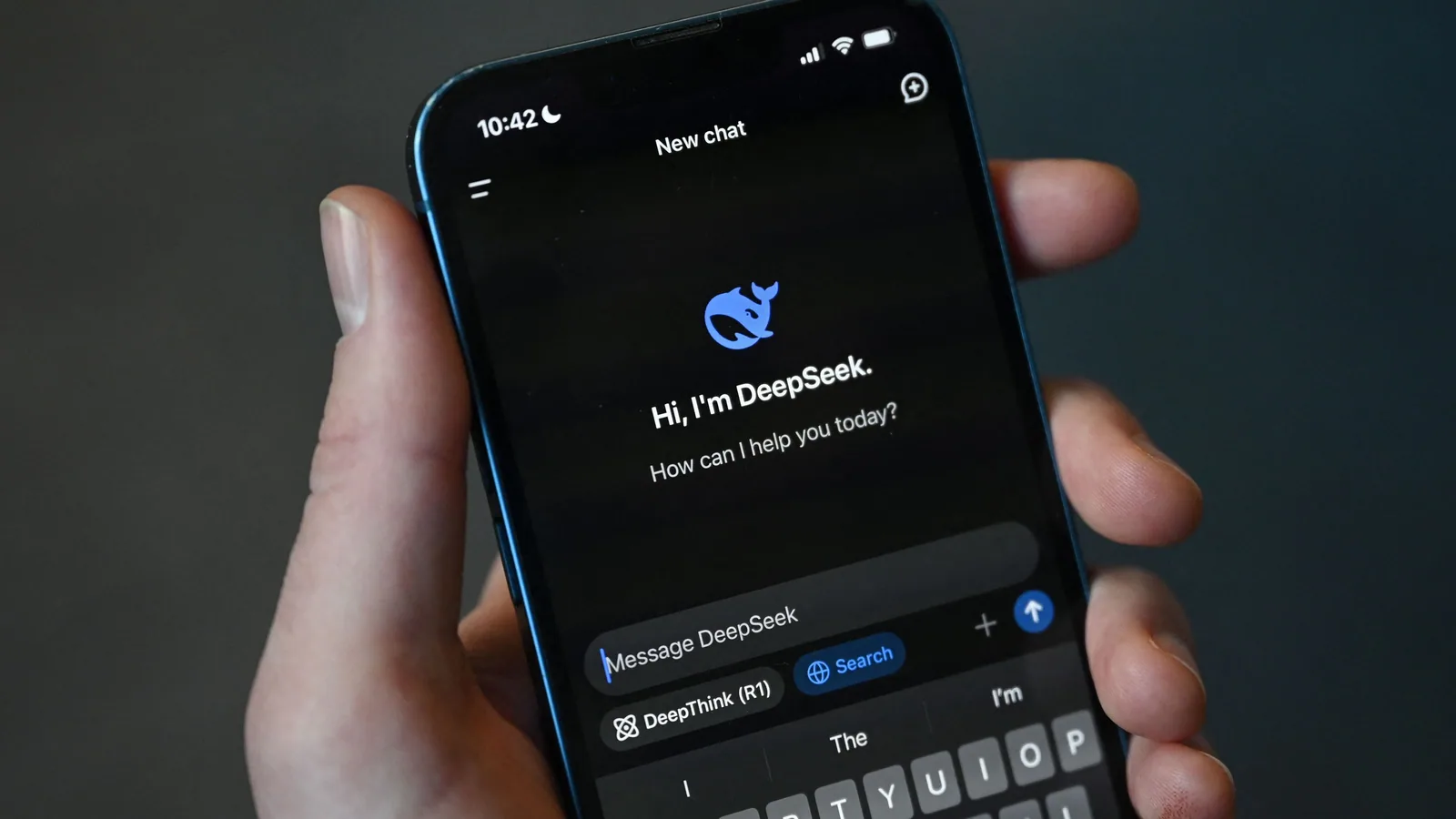
I’ve been messing around with DeepSeek AI Chat lately, trying to see whether it’s the next big thing or just another overhyped bot. In this article I’ll share what DeepSeek is (as much as I’ve figured), how it works (or claims to), what feels good about it, where it disappoints, and whether I think you should try it (or at least keep an eye on it). As promised, there’ll be human‑style mistakes, uneven flow, digressions, because that’s the flavor you asked for.
What is DeepSeek AI Chat?
DeepSeek is a generative AI chatbot developed by a Chinese AI company. It launched publicly in 2025, with versions like “V3” and “R1” being talked about. It tries to compete with big names like ChatGPT by offering chat, translation, coding help, writing, etc.
The idea is: you can talk to DeepSeek in plain language, ask questions, get help with coding, do translations, research, etc. Some versions support 100+ languages. It works on web, mobile apps, sometimes via APIs or browser extensions.
One interesting thing: DeepSeek is sometimes free or “freemium” — you get a base usage, maybe with limits, and in many cases no login or account is needed to start chatting.
So in short: DeepSeek is aiming to be a versatile AI chat assistant, a tool for both casual users and devs, with multi‑language support, translations, code help, etc.
How DeepSeek AI Chat Works (or Claims to)
DeepSeek’s architecture and features are somewhat opaque, but based on bits I found and user testing, here’s what seems likely or claimed:
-
DeepSeek models (V3, R1) are large language models trained on multilingual data, including Chinese and English.
-
They support different “modes” (chat, coding, translation) so switching internal submodels or settings is possible.
-
Some deployments (unofficial ones) try to host models with privacy in mind (e.g., Germany hosting R1 with GDPR compliance).
-
DeepSeek has a context / token length limit — the chat length can’t go on forever; older parts of conversation may get truncated.
-
It sometimes faces server load / “busy” errors under heavy demand.
-
It may not retain memory across chats — so when you start a new chat, earlier context is lost (unless you manually summarise or feed back).
-
There is evidence DeepSeek is used (or deployed) in various ways — web interface, mobile apps, browser extensions.
-
The model’s performance in tasks (e.g. bibliographic reference generation or programming tasks) has been benchmarked against ChatGPT; results are mixed (some tasks DeepSeek does better, some worse).
So basically it’s in the same general family as other big LLM chat systems, with tradeoffs in memory, stability, capacity.
Strengths: What DeepSeek Does Well (And Where It Impresses)
When I (and other users) used DeepSeek, these things stood out as its strengths:
1. Strong Performance in Some Domains
In coding, translation, creative writing, many users report DeepSeek giving surprisingly strong answers. I tried a coding bug I struggled with, and it gave a working snippet faster than some other models I tried.
One paper compared DeepSeek and other AI bots in bibliography reference tasks: DeepSeek and Grok were among the only ones that did not produce totally fake references in the test — though still many were partially wrong. That tells me DeepSeek is cautious (or more conservative) about inventing “facts”.
2. Multilingual Support & Translation
DeepSeek supports many languages, which is a big plus if you’re working across English / Chinese / others. The translation feature is integrated, so you can ask it to translate while preserving style/context. For users needing cross‑language help, that’s a strong point.
3. Ease & Accessibility
Some DeepSeek chat versions require no login to use. You just go to web, start chatting. That reduces friction. Also, browser extensions or deployment in simple apps make it accessible.
4. Creative / Generative Use
For writing, ideation, brainstorming, story prompts — DeepSeek is good. Many users praise how fluid, imaginative, and “alive” it feels in creative tasks.
5. Competitiveness in Certain Benchmarks
In several contemporary studies, DeepSeek performs well on certain benchmarks. In coding / programming, it was comparable in easy tasks to ChatGPT (though ChatGPT often beats it in medium or harder ones). Also, in an AI reference retrieval benchmark, it avoided entirely fake references (something many models do).
So DeepSeek is no slouch — for many real world tasks, it can be competent or even better in certain niches.
Weaknesses, Bugs, and Real‑World Frustrations
But DeepSeek is far from perfect. In fact, many users (including myself) saw these annoyances or dealbreakers.
1. Chat Length / Memory Limitations
The bot doesn’t remember entire conversations forever. At some point you hit a “length limit reached, please start a new chat” error. That means your long story, discussion, or chain of reasoning breaks. You must often summarize and re‑feed context manually.
People on forums say messages within same chat sometimes vanish or get truncated. This is frustrating if you lose part of your work.
2. Server Load & “Busy” Errors
Because DeepSeek is popular, the servers sometimes get overloaded. You may get “server busy” errors, delays, or the model refusing to respond under heavy usage. This happens especially in peak times or with the heavier R1 model.
If you use a VPN or from far region, latency or errors may worsen.
3. Inconsistent Accuracy / Hallucinations
As with all LLMs, DeepSeek sometimes gives incorrect or invented statements. While its caution helps avoid totally bogus references in some benchmarks, in real use I found it gets details wrong (dates, names, subtle technical aspects). Always double-check when it matters.
4. Lack of Cross‑Chat Continuity
Because it doesn’t reliably keep memory between separate chats, you lose continuity. If you’re working on a long project, you often have to recast previous context or summaries. It’s tedious.
5. Censorship / Content Filtering / Safety Limits
Sometimes DeepSeek might refuse or filter content (especially sensitive or adult content). Its safety layers may block you from exploring certain topics fully. Also, versions or deployments might differ in how strict their filters are.
6. Privacy & Security Concerns
Some governments and authorities have raised concerns about DeepSeek’s data policies — especially because it’s a Chinese AI app. Certain countries banned or restricted it over data transfer / privacy worries. If you’re using it for sensitive work, this is a red flag.
7. Performance Drop in Hard Tasks
While DeepSeek is good at easier or moderate tasks, in very hard technical or specialized tasks, it sometimes underperforms versus top models. For example, in some programming benchmarks, ChatGPT outperformed DeepSeek in medium difficulty tasks.
Also, some audits found DeepSeek fails many “news / info correctness” challenges more often than ideal.
Use Cases: When DeepSeek Chat is Good (And When Better Use Something Else)
Based on strengths & weaknesses, here’s when DeepSeek is a good pick, and when you might prefer alternatives:
✅ Good Use Cases
-
Brainstorming ideas, creative writing, storytelling
-
Translation between languages, especially when nuance matters
-
Coding help & debugging (for simpler or moderate tasks)
-
Drafting content, emails, essays, research summaries
-
Quick Q&A, explanations, concept understanding
-
Multi‑language or cross‑cultural tasks
❌ Less Ideal Situations
-
Tasks where continuity and memory over long sessions is crucial
-
Very specialized or technical fields requiring super precise accuracy
-
Sensitive or private info (legal, medical, high secrecy)
-
Real‑time usage under heavy load / server stress
-
When you need an AI with guaranteed stability or strict compliance
In those harder cases, it’s safer to cross-check with stronger/established models or human experts.
User Reports & Anecdotes: What People Say
I dug into forums, Reddit, etc. — here are some real stories that reflect the experience (warts and all).
-
One user said DeepSeek solved a code bug in two minutes when ChatGPT was going in circles. That gives a sense of its edge in certain tasks.
-
Others complain that after some time, the chat “length limit” kicks in, and part of the conversation disappears.
-
Many report “server busy” errors especially when using R1 mode or during high demand.
-
Some mention that DeepSeek feels more imaginative and less “safe/boring” than other AI for creative stuff, but also more prone to repeat or degenerate when pushed.
-
There are reports of message loss: you revisit a chat, and some messages are missing even though you didn’t delete them.
So the experience is mixed: high highs, low lows.
My Personal DeepSeek Experience (What I Liked & Didn’t)
When I used DeepSeek for a few projects, here’s what struck me:
-
I asked DeepSeek to help me draft a long article outline. It gave a strong skeleton, with section ideas, some references, a rough flow. That saved me ~30–45 minutes.
-
During that same session, after a while, the model said “length limit reached – start new chat”. So I had to copy part of the conversation, summarize, start fresh, feed it the summary. Tiring.
-
For translation, DeepSeek preserved tone decently well for languages I know; but for obscure idioms, it stumbles.
-
When I tried a harder coding task (complex algorithm), DeepSeek gave plausible pseudo‑code but with errors; I had to correct and prompt multiple times.
-
Sometimes responses lagged or timed out.
-
I tested roleplay / creative scenario writing: DeepSeek was fun, imaginative, sometimes “looser” than ChatGPT, which is good or bad depending on what you want.
Overall, my feeling: DeepSeek is a promising tool — not perfect, but very useful if you work smartly around its limits.
What I Hope DeepSeek Improves Over Time
If DeepSeek wants to become a go‑to AI chat tool, these are things it really ought to improve:
-
Better memory / cross‑chat continuity so your context isn’t lost.
-
More stability, fewer “busy” or timeout errors, more server capacity.
-
Stricter verification / fact checking, reducing hallucinations.
-
More transparency about data privacy, security, where data is stored.
-
Longer chat sessions / token limits.
-
Options for offline or local usage (if possible).
-
More customization: let user set style, tone, depth, etc.
If they make even some of these improvements, DeepSeek could be a serious competitor in the AI assistant space.
DeepSeek vs Others (ChatGPT, etc.)
Putting DeepSeek side by side with more established AI:
| Feature | DeepSeek AI | ChatGPT / Others |
|---|---|---|
| Creative / imaginative output | Strong, more lively | Polished, safe, but sometimes bland |
| Memory / chat continuity | Weak, often limited | Better (depends on plan) |
| Performance on technical / hard tasks | Decent, but struggles more | Usually stronger, especially with paid models |
| Cost / free access | Good free options, frictionless in many versions | Often limited free tier, paywalls |
| Multilingual translation | Strong capability | Good, but sometimes less fluent in some languages |
| Server stability | Prone to busy / timeouts | More stable generally (esp in paid tiers) |
| Privacy / data concerns | Risky (due to origin, regulation) | More scrutiny, but still concerns exist |
| Community / ecosystem support | Growing | Larger, more mature |
So DeepSeek has competitive edges, especially for creativity, multilingual work, free access; but lags in memory, stability, high reliability tasks.
Should You Use DeepSeek AI Chat?
Yes — but with caveats.
If you’re curious, doing non-critical work, creative writing, translation, or learning — it’s definitely worth trying. Use it as a companion, not your only source of truth.
But if you’re doing something where errors, data exposure, or loss of work is costly, don’t rely only on DeepSeek. Use it alongside more proven tools, verify outputs, keep backups, etc.
I think DeepSeek has the potential to grow into something truly exceptional — especially if they fix memory, stability, privacy issues. Right now, it’s usable, fun, sometimes brilliant — but also flawed.